
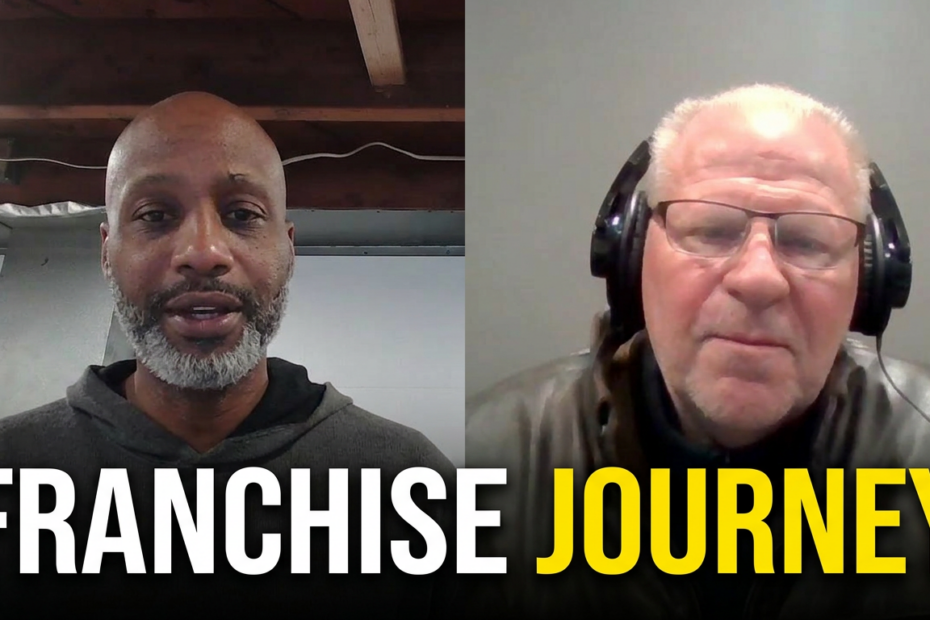
In this episode of The CEO’s Grind, Jay Silva and Wesley Rosenberg explore the intersection of tactical decision-making and leadership philosophy, beginning with a deceptively simple scenario that reveals deeper business truths.
Jay opens with a real-world situation involving a returning guest staying at one of his Cleveland properties. Rather than requesting the same suite, the guest expresses a preference for a different setup—one that better aligns with his lifestyle as a remote worker. He values a communal space, the ability to cook, and a more flexible environment over the standard offering.
This moment becomes a launching point for a broader conversation around value-based pricing. Instead of defaulting to standard rates or promotional discounts, Jay considers how pricing should reflect the specific value perceived by the customer. The discussion highlights a key principle: businesses should not price based solely on what something “is,” but on what it means to the buyer.
Jay emphasizes that there is “no shame in the game” when both sides win—when the business meets its revenue targets and the customer feels the offering is tailored to their needs. This approach challenges traditional pricing models and introduces a more dynamic, customer-centric mindset.
Wes responds with a grounded, operational perspective. He points out that longer commitments—such as a three-week stay—bring security to a business. That predictability can justify offering a discount, reinforcing the balance between customization and financial stability. This contrast between flexibility and structure becomes a recurring theme throughout the episode.
As the conversation transitions into a reflection on the first quarter, Wes shares an honest assessment of his company’s performance. The year began slowly, as expected after the holiday season, but momentum built steadily. February and March delivered stronger results, and he anticipates finishing the quarter profitably—something that is not typical for his business.
More importantly, Wes highlights the internal changes driving this improvement: restructuring departments, empowering leaders, and pushing teams to pursue new opportunities. Each department faces unique challenges, reinforcing the complexity of managing a growing organization.
This leads Jay into a deeper analysis drawn from his consulting experience. While companies may appear to have vastly different problems, he argues that they all fall into three core categories:
This framework becomes a central anchor for the episode. Whether the business is in plumbing, hospitality, or healthcare, the underlying barriers to success are remarkably consistent. The difference lies in how quickly and effectively those barriers are identified and addressed.
Jay emphasizes that the speed of problem-solving is directly tied to the environment leaders create. Teams that feel empowered to speak up, share insights, and take ownership are far more effective than those operating in silence or fear.
The conversation reaches a pivotal moment when Wes challenges the idea of giving employees a voice. Jay responds by clarifying a critical distinction: giving someone a voice does not mean giving up control.
Instead, it means creating a culture where employees feel safe to raise concerns early—before those concerns turn into resistance, disengagement, or operational breakdowns. Leaders still make the final decisions, but those decisions are better informed when teams are encouraged to contribute.
Jay illustrates this with a sports analogy. A basketball player should feel comfortable questioning a play if they see a flaw—but the coach ultimately decides the strategy. This balance between openness and authority is essential for high-performing teams.
The discussion also touches on the dangers of silence within organizations. When employees feel they cannot speak freely, issues remain hidden. Over time, this creates a “poisoned well” where frustration builds beneath the surface, undermining progress and morale.
Another key theme is alignment. Jay explains that employees perform best when:
When these elements are in place, teams operate closer to full capacity—not through pressure, but through clarity and engagement.
As the episode closes, both hosts reinforce a powerful idea: leadership is not about having all the answers. It is about building systems and cultures that allow answers to emerge.
Successful businesses are not defined solely by their strategies or metrics, but by the strength of their people and the clarity of their processes. Leaders who foster communication, maintain direction, and adapt to individual needs are the ones who create lasting impact.
This episode explains how businesses grow by aligning pricing with customer value, solving problems through people, process, and systems, and creating a culture where employees have a voice but leaders maintain direction.
What is value-based pricing in business?
Value-based pricing is a strategy where businesses set prices based on the customer’s perceived value rather than fixed rates or costs. It focuses on outcomes and experience.
What are the three main types of business problems?
Most business problems fall into three categories:
- People
- Process
- System (Technology)
Why is employee voice important in leadership?
Employee voice helps surface problems early, improves communication, and increases engagement—while leadership still maintains final decision-making authority.
Does giving employees a voice mean giving up control?
No. Strong leaders encourage input but retain responsibility for final decisions and direction.